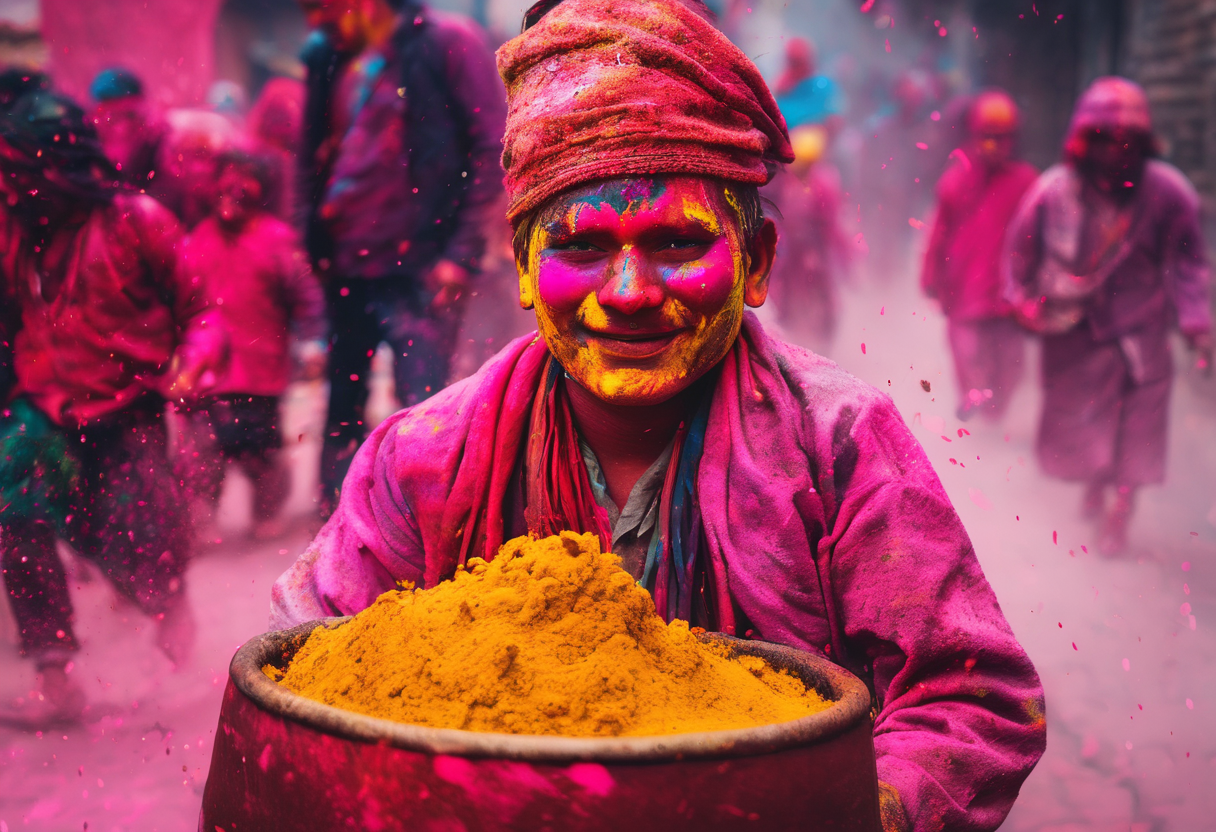
Holi, also known as the Festival of Colors, is one of the most popular and lively festivals celebrated in Nepal, particularly in Kathmandu. This vibrant festival is a celebration of the victory of good over evil and the arrival of spring. The streets of Kathmandu are filled with a joyful atmosphere and a kaleidoscope of colors as people gather to partake in the traditional customs and rituals of Holi.One of the most significant traditions of Holi is the lighting of the Holika bonfire the night before the main festival. This ritual symbolizes the triumph of good over evil, as the bonfire represents the burning of the demon Holika. The following day, people gather in the streets throwing colored powder and water at each other, in a tradition known as “playing Holi”. This joyful and playful act is believed to bring good luck and prosperity. Another important tradition during Holi is the preparation and consumption of special delicacies such as gujiya, a sweet dumpling filled with khoya, nuts, and dried fruits. Families and friends also come together to celebrate with traditional dances, music and singing during Holi.
Aside from the colorful festivities, Holi is also a time for traditional and religious practices in Kathmandu. Many devout Hindus visit temples to offer prayers and seek blessings from the Gods. The temples are beautifully adorned with colorful flowers and festivities can be seen throughout the city. It is also common for people to apply tilak, a red powder, on each other’s foreheads as a symbol of blessing and goodwill. This tradition is deeply rooted in the spiritual significance of Holi, which is the victory of good over evil.Moreover, Holi is a time for unity and embracing diversity in Kathmandu. People from all walks of life come together to celebrate this festival, breaking all barriers of caste, creed, and social status. It is a time of forgiveness and spreading love and joy among friends, family, and strangers alike. The traditional customs and rituals observed during Holi in Kathmandu reflect the rich cultural heritage and values of the city and continue to be cherished by generations to come.